Riftbound: Unleashed Pre-Rift Event at Gnome Games Green Bay West

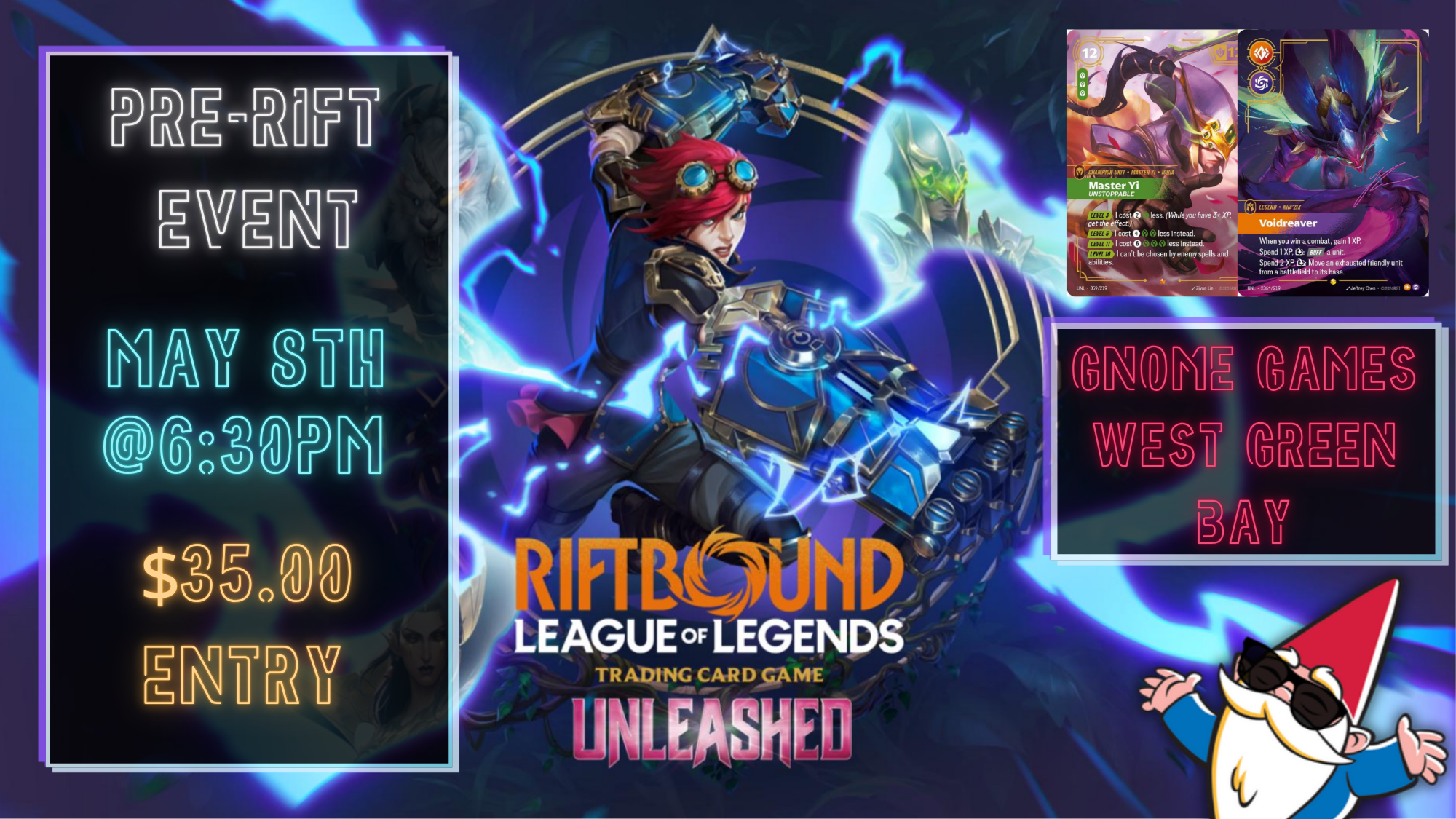
Calling all Summoners! Join us at Gnome Games Green Bay West at the Pre-Rift event this Friday, May 8th at 6:30pm!

The Gnomes will be hosting up to 16 players for a chance to play with the Unleashed cards before the full release!

Entry is $35+tax and that gets you a Player kit and entry to the 3 round tournament, where in each round you win, you receive a pack of Unleashed!

• Each Player Kit contains
♦ 1 Mini-precon (15 cards including Champion Legend, Champion Unit)
♦ 5 Unleashed! Booster Packs
♦ 1 Ashe, Focused Promo Card

Preregister for the event ahead of time at:
https://locator.riftbound.uvsgames.com/events/341128

Want an overview of the set? Check it out here!

**New Mechanics **
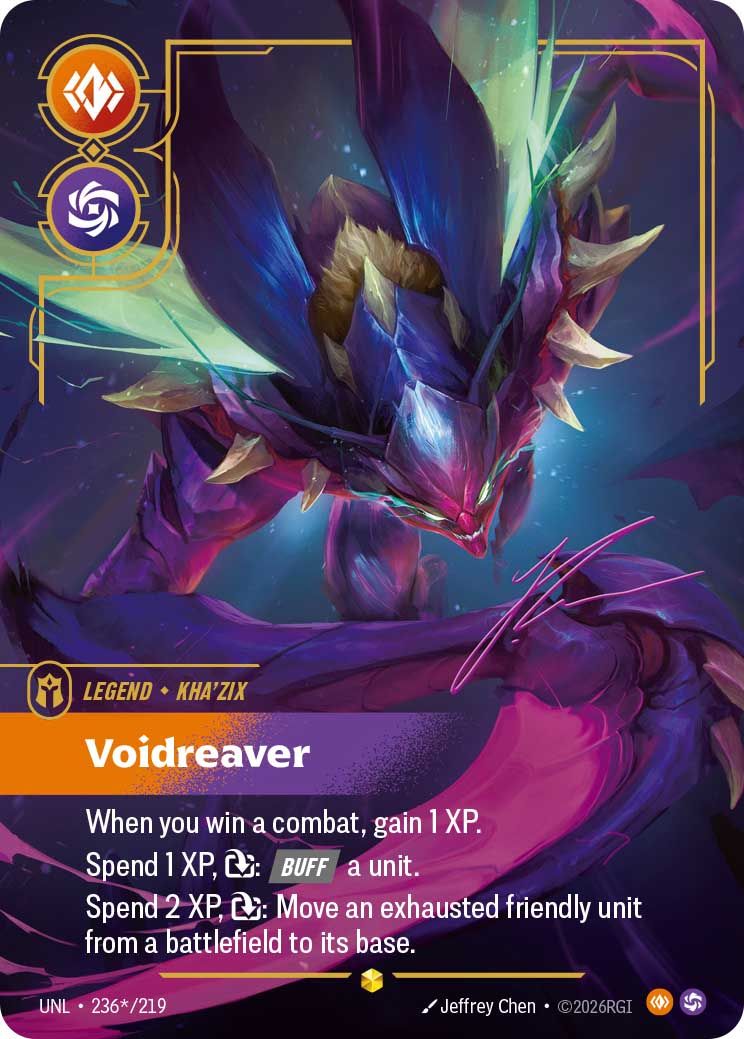
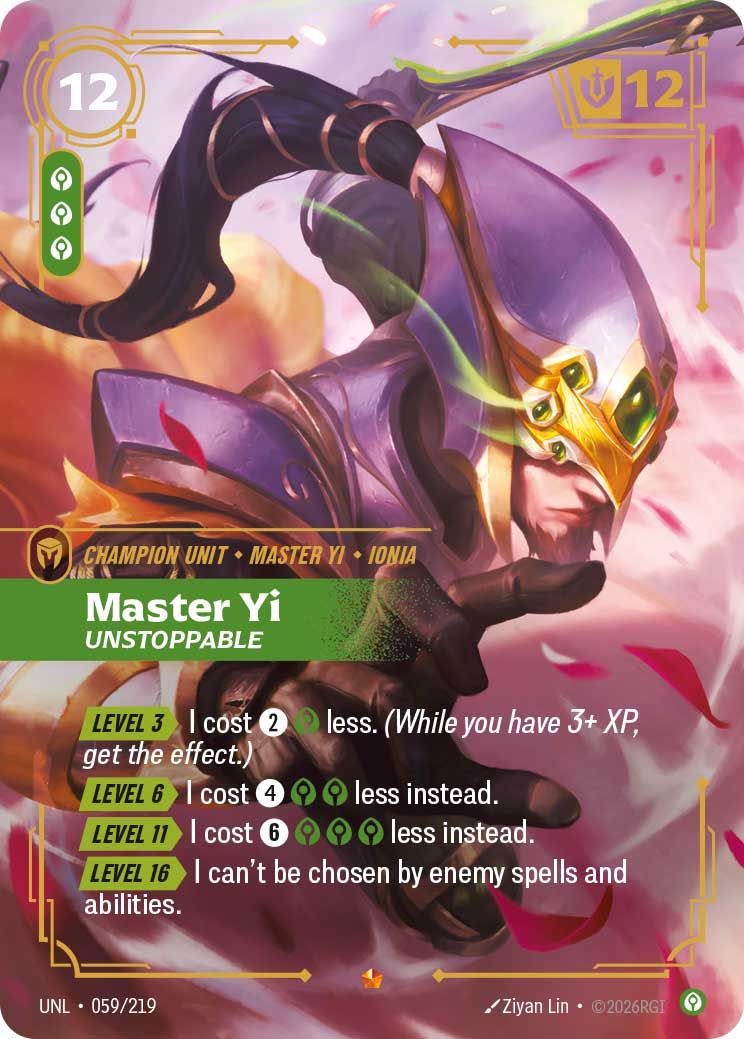
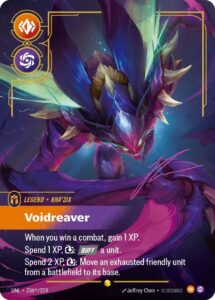
XP: You can gain and spend XP for interesting effects (As displayed with Voidreaver and Master Yi below)


Hunt: Hunt is a new mechanic that helps you build up the XP you’ll use to enhance your cards or spend for splashy effects. When a unit with Hunt conquers or holds a battlefield, you’ll gain the amount of XP on the card.
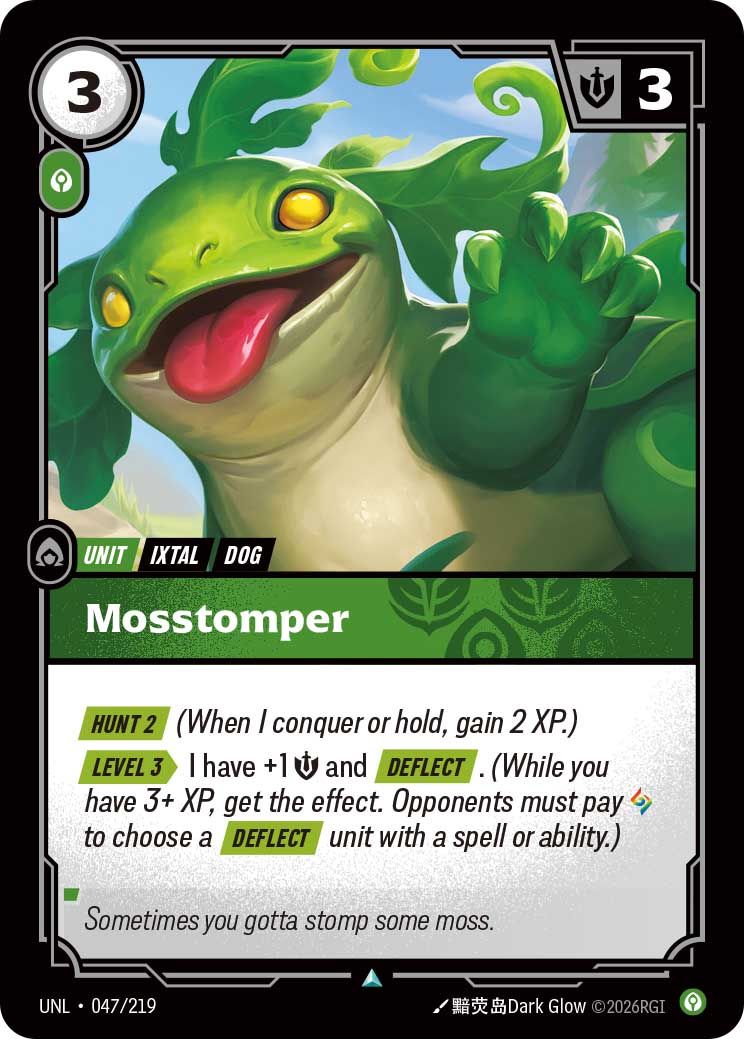


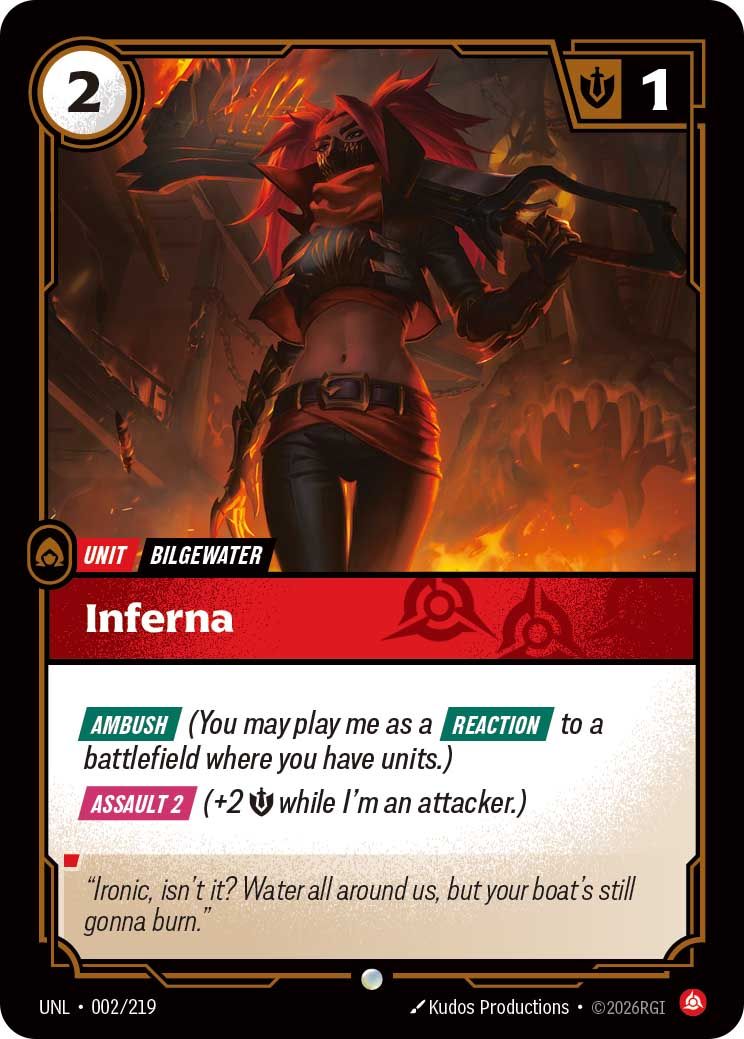
Ambush: In League of Legends, one of the core skills of a jungler is the ability to attack from concealment at just the right moment. In Riftbound, the new Ambush mechanic lets you do that too. Specifically, Ambush lets you play a unit as a Reaction to a battlefield where you have units. Like Inferna!


There’s this and so much more coming in the newest set, Riftbound: Unleashed! Make a trip to Gnome Games Green Bay West to see all these fun mechanics in action for our Pre-rift Event!

See what other fun events we have coming up at Gnome Games on our Event Calendar!
Riftbound: Unleashed Pre-Rift Event at Gnome Games Green Bay West

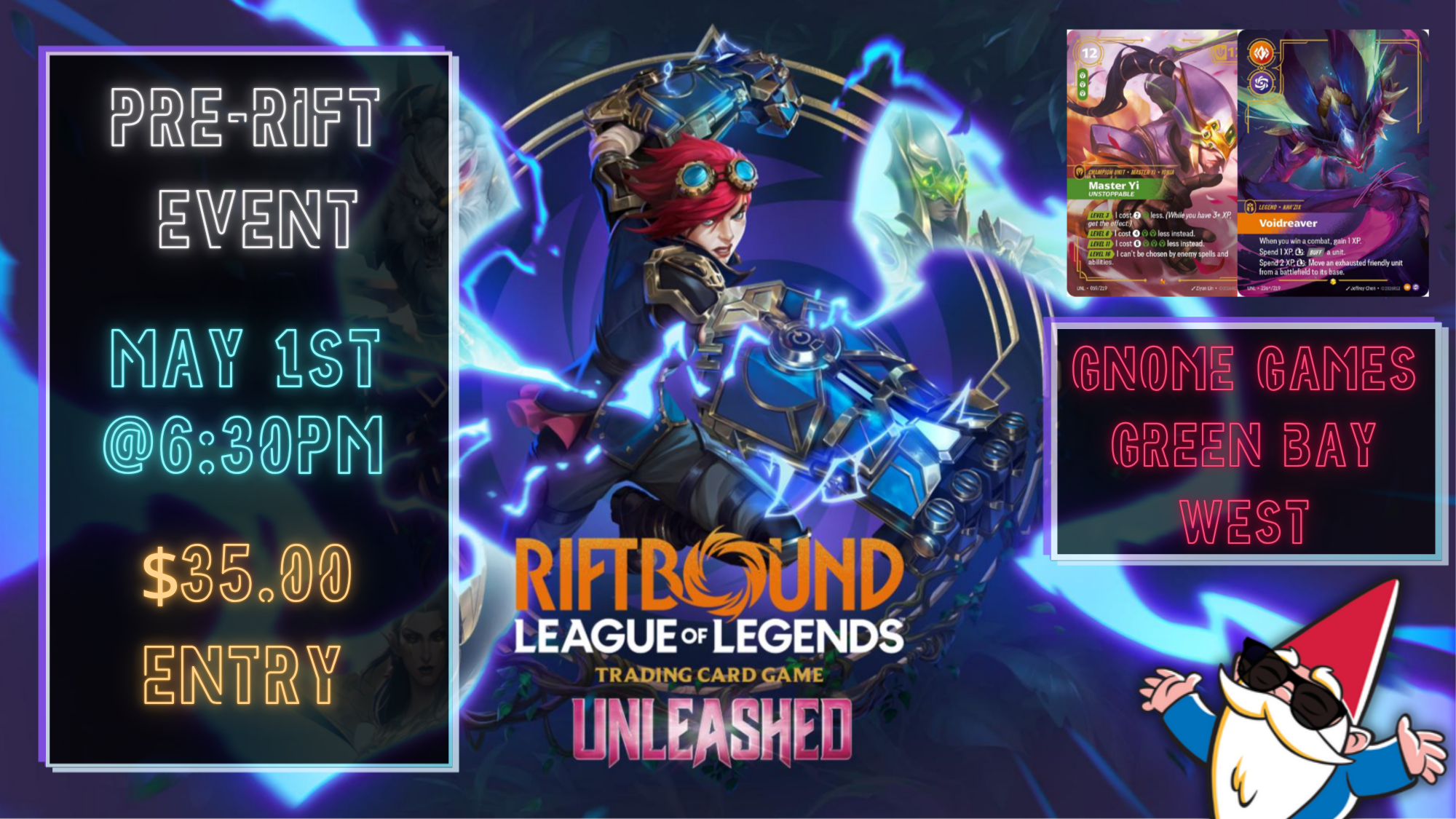
Calling all Summoners! Join us at Gnome Games Green Bay West at the Pre-Rift event this Friday, May 1st at 6:30pm!

The Gnomes will be hosting up to 16 players for a chance to play with the Unleashed cards before the full release!

Entry is $35+tax and that gets you a Player kit and entry to the 3 round tournament, where in each round you win, you receive a pack of Unleashed!

• Each Player Kit contains
♦ 1 Mini-precon (15 cards including Champion Legend, Champion Unit)
♦ 5 Unleased! Booster Packs
♦ 1 Ashe, Focused Pre-Rift Promo Card

Preregister for the event ahead of time at:
https://locator.riftbound.uvsgames.com/events/341128

Want an overview of the set? Check it out here!

**New Mechanics **
XP: You can gain and spend XP for interesting effects (As displayed with Voidreaver and Master Yi below)


Hunt: Hunt is a new mechanic that helps you build up the XP you’ll use to enhance your cards or spend for splashy effects. When a unit with Hunt conquers or holds a battlefield, you’ll gain the amount of XP on the card.


Ambush: In League of Legends, one of the core skills of a jungler is the ability to attack from concealment at just the right moment. In Riftbound, the new Ambush mechanic lets you do that too. Specifically, Ambush lets you play a unit as a Reaction to a battlefield where you have units. Like Inferna!


There’s this and so much more coming in the newest set, Riftbound: Unleashed! Make a trip to Gnome Games Green Bay West to see all these fun mechanics in action for our Pre-rift Event!

See what other fun events we have coming up at Gnome Games on our Event Calendar!
Riftbound Unleashed Pre-Rift at Gnome Games Appleton East – $35

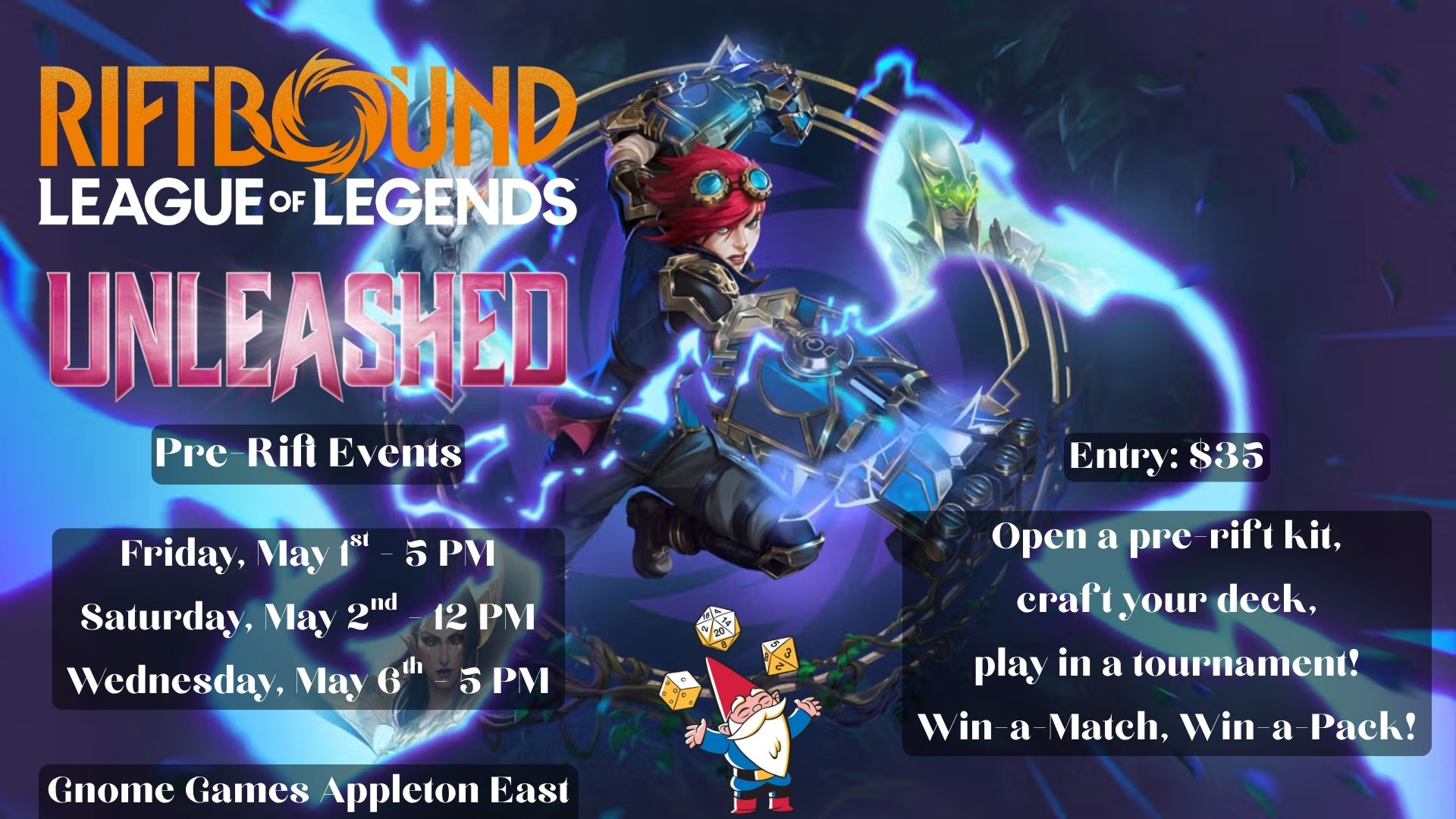
Join us at Gnome Games Appleton East for our Riftbound Unleashed Pre-Rift!

On May 2nd at 12 PM, compete in an exclusive pre-rift tournament for Unleashed! Gain early access to the newest set, releasing May 8th, by participating in one of our events! At a pre-rift event, players open a pre-rift kit, build up their decks with the contents within, and play in a 3 round Swiss style tournament using their decks. Each match won awards players with an additional Unleashed pack! Players have 50 minutes to build their decks before the tournament starts. Rounds are 50 minutes, best of 3.
Players must register ahead of time on the Riftbound Event Locator. Our event is here! A carde.io account with a linked Riot Account is required for registration. Don’t have one? Sign up here!

Entry is $35.

We’re hosting two additional Pre-Rifts on Friday, May 1st and Wednesday, May 6th! Take a peek at our Appleton North Pre-Rifts on Sunday, May 3rd and Monday, May 4th as well!

What is Riftbound?

Riftbound is a collectable trading card game featuring a vast array of characters and locales from League of Legends. Choose a Legend and Chosen Champion card for your deck and battle it out between 2 to 4 players in various game modes! The most important card in your deck is your champion legend. This is the card you build your deck around—it determines your options for the chosen champion who starts faceup on the board and who you’ll send to fight for you, and it defines the domains (colors) of your deck’s cards.
Your legend and your chosen champion define your strategy. Maybe your plan is quick strikes, maybe it’s to build up an unstoppable huge army, or maybe it’s to use one incredibly powerful and mobile fighter. You’ll have additional units (and other champion units) to send to fight, spells to help them win, and even gear to empower your team.

For a more guided How to Play experience, take a look at the Riftbound How to Play website!

Want more Riftbound news for events and sets? Check out their website!

Our Gnome Games calendar has more Riftbound events to see!

Riftbound Nexus Nights – Thursdays at Green Bay East

Join the Gnomes each Thursday at 5:30pm for Riftbound’s Nexus Nights!

Tournaments starting at 5:30pm
Entry is $10
Win a Match Win a Pack, Riftbound Promos

Join us weekly for some fun Riftbound action.

The domains are:

  • Fury (Red) –
    • Fury is about aggression, passion, and the thrill of conquering.
    • Fury decks often use damage-based removal, Accelerate (and other ways to enter ready), and rewards for conquering to achieve victory.
    • Generally, Fury cards have a harder time drawing lots of cards or killing units directly, especially units that stay out of combat in their base.
    • Examples of Fury from popular fiction are Conan the Barbarian, Blade, and Anakin Skywalker.
  • Calm (Green)
    • Calm is about balance, meditation, and the peace of holding.
    • Calm decks often use defensive tricks, moving enemies, and negating interaction (like counterspells and stuns) to defend their holds and achieve victory.
    • Generally, Calm cards have a harder time being very aggressive or interacting without using their units.
    • Examples of Calm from popular fiction are Gandalf, Baloo, and Obi Wan Kenobi.
  • Mind (Blue)
    • Mind is about innovation, outsmarting opponents, and the benefits of intelligence and curiosity.
    • Mind decks often use long-term planning, shrinking tricks, card draw, hidden and gear synergy to gain an advantage and achieve victory.
    • Generally, Mind cards have a harder time with moving units or having efficient units.
    • Examples of Mind from popular fiction are Sherlock Holmes, Curious George, and Yoda.
  • Body (Orange)
    • Body is about physical superiority, agility, and connection to the wilds.
    • Body decks often ramp their resources, play efficient and high impact units, and dominate combats to achieve victory.
    • Generally, Body cards have a harder time with finding efficient card draw or noncombat spells.
    • Examples of Body from popular fiction are The Terminator, Juggernaut, and Chewbacca.
  • Chaos (Purple) –
    • Chaos is about unpredictability, rebellion, and trickiness.
    • Chaos decks often manipulate position and the trash, use hidden tricks, and filter toward the right cards to achieve victory.
    • Generally, Chaos cards have a harder time permanently eliminating a threat or giving permanent advantages to its units.
    • Examples of Chaos from popular fiction are V (for Vendetta), Spiderman, and Han Solo.
  • Order (Yellow) –
    • Order is about unity, community, and sacrifice for the greater good.
    • Order decks often generate many small units, gain effects on unit death, and kill units directly to achieve victory.
    • Generally, Order cards have a harder time dealing with smaller units and moving units.
    • Examples of Order from popular fiction are Superman, Cobra Commander, and Leia Organa.

One way to start building a deck is to start with a domain you think fits your playstyle (or just style, generally) and search for cool cards you might want to fit into a deck.

Look for this and other events at our website: gnomegames.com/events/month!

Riftbound Nexus Nights – Thursdays at Green Bay East

Join the Gnomes each Thursday at 5:30pm for Riftbound’s Nexus Nights!

Tournaments starting at 5:30pm
Entry is $10
Win a Match Win a Pack, Riftbound Promos

Join us weekly for some fun Riftbound action.

The domains are:

  • Fury (Red) –
    • Fury is about aggression, passion, and the thrill of conquering.
    • Fury decks often use damage-based removal, Accelerate (and other ways to enter ready), and rewards for conquering to achieve victory.
    • Generally, Fury cards have a harder time drawing lots of cards or killing units directly, especially units that stay out of combat in their base.
    • Examples of Fury from popular fiction are Conan the Barbarian, Blade, and Anakin Skywalker.
  • Calm (Green)
    • Calm is about balance, meditation, and the peace of holding.
    • Calm decks often use defensive tricks, moving enemies, and negating interaction (like counterspells and stuns) to defend their holds and achieve victory.
    • Generally, Calm cards have a harder time being very aggressive or interacting without using their units.
    • Examples of Calm from popular fiction are Gandalf, Baloo, and Obi Wan Kenobi.
  • Mind (Blue)
    • Mind is about innovation, outsmarting opponents, and the benefits of intelligence and curiosity.
    • Mind decks often use long-term planning, shrinking tricks, card draw, hidden and gear synergy to gain an advantage and achieve victory.
    • Generally, Mind cards have a harder time with moving units or having efficient units.
    • Examples of Mind from popular fiction are Sherlock Holmes, Curious George, and Yoda.
  • Body (Orange)
    • Body is about physical superiority, agility, and connection to the wilds.
    • Body decks often ramp their resources, play efficient and high impact units, and dominate combats to achieve victory.
    • Generally, Body cards have a harder time with finding efficient card draw or noncombat spells.
    • Examples of Body from popular fiction are The Terminator, Juggernaut, and Chewbacca.
  • Chaos (Purple) –
    • Chaos is about unpredictability, rebellion, and trickiness.
    • Chaos decks often manipulate position and the trash, use hidden tricks, and filter toward the right cards to achieve victory.
    • Generally, Chaos cards have a harder time permanently eliminating a threat or giving permanent advantages to its units.
    • Examples of Chaos from popular fiction are V (for Vendetta), Spiderman, and Han Solo.
  • Order (Yellow) –
    • Order is about unity, community, and sacrifice for the greater good.
    • Order decks often generate many small units, gain effects on unit death, and kill units directly to achieve victory.
    • Generally, Order cards have a harder time dealing with smaller units and moving units.
    • Examples of Order from popular fiction are Superman, Cobra Commander, and Leia Organa.

One way to start building a deck is to start with a domain you think fits your playstyle (or just style, generally) and search for cool cards you might want to fit into a deck.

Look for this and other events at our website: gnomegames.com/events/month!

Riftbound Nexus Nights – Thursdays at Green Bay East

Join the Gnomes each Thursday at 5:30pm for Riftbound’s Nexus Nights!

Tournaments starting at 5:30pm
Entry is $10
Win a Match Win a Pack, Riftbound Promos

Join us weekly for some fun Riftbound action.

The domains are:

  • Fury (Red) –
    • Fury is about aggression, passion, and the thrill of conquering.
    • Fury decks often use damage-based removal, Accelerate (and other ways to enter ready), and rewards for conquering to achieve victory.
    • Generally, Fury cards have a harder time drawing lots of cards or killing units directly, especially units that stay out of combat in their base.
    • Examples of Fury from popular fiction are Conan the Barbarian, Blade, and Anakin Skywalker.
  • Calm (Green)
    • Calm is about balance, meditation, and the peace of holding.
    • Calm decks often use defensive tricks, moving enemies, and negating interaction (like counterspells and stuns) to defend their holds and achieve victory.
    • Generally, Calm cards have a harder time being very aggressive or interacting without using their units.
    • Examples of Calm from popular fiction are Gandalf, Baloo, and Obi Wan Kenobi.
  • Mind (Blue)
    • Mind is about innovation, outsmarting opponents, and the benefits of intelligence and curiosity.
    • Mind decks often use long-term planning, shrinking tricks, card draw, hidden and gear synergy to gain an advantage and achieve victory.
    • Generally, Mind cards have a harder time with moving units or having efficient units.
    • Examples of Mind from popular fiction are Sherlock Holmes, Curious George, and Yoda.
  • Body (Orange)
    • Body is about physical superiority, agility, and connection to the wilds.
    • Body decks often ramp their resources, play efficient and high impact units, and dominate combats to achieve victory.
    • Generally, Body cards have a harder time with finding efficient card draw or noncombat spells.
    • Examples of Body from popular fiction are The Terminator, Juggernaut, and Chewbacca.
  • Chaos (Purple) –
    • Chaos is about unpredictability, rebellion, and trickiness.
    • Chaos decks often manipulate position and the trash, use hidden tricks, and filter toward the right cards to achieve victory.
    • Generally, Chaos cards have a harder time permanently eliminating a threat or giving permanent advantages to its units.
    • Examples of Chaos from popular fiction are V (for Vendetta), Spiderman, and Han Solo.
  • Order (Yellow) –
    • Order is about unity, community, and sacrifice for the greater good.
    • Order decks often generate many small units, gain effects on unit death, and kill units directly to achieve victory.
    • Generally, Order cards have a harder time dealing with smaller units and moving units.
    • Examples of Order from popular fiction are Superman, Cobra Commander, and Leia Organa.

One way to start building a deck is to start with a domain you think fits your playstyle (or just style, generally) and search for cool cards you might want to fit into a deck.

Look for this and other events at our website: gnomegames.com/events/month!

Riftbound Nexus Nights – Thursdays at Green Bay East

Join the Gnomes each Thursday at 5:30pm for Riftbound’s Nexus Nights!

Tournaments starting at 5:30pm
Entry is $10
Win a Match Win a Pack, Riftbound Promos

Join us weekly for some fun Riftbound action.

The domains are:

  • Fury (Red) –
    • Fury is about aggression, passion, and the thrill of conquering.
    • Fury decks often use damage-based removal, Accelerate (and other ways to enter ready), and rewards for conquering to achieve victory.
    • Generally, Fury cards have a harder time drawing lots of cards or killing units directly, especially units that stay out of combat in their base.
    • Examples of Fury from popular fiction are Conan the Barbarian, Blade, and Anakin Skywalker.
  • Calm (Green)
    • Calm is about balance, meditation, and the peace of holding.
    • Calm decks often use defensive tricks, moving enemies, and negating interaction (like counterspells and stuns) to defend their holds and achieve victory.
    • Generally, Calm cards have a harder time being very aggressive or interacting without using their units.
    • Examples of Calm from popular fiction are Gandalf, Baloo, and Obi Wan Kenobi.
  • Mind (Blue)
    • Mind is about innovation, outsmarting opponents, and the benefits of intelligence and curiosity.
    • Mind decks often use long-term planning, shrinking tricks, card draw, hidden and gear synergy to gain an advantage and achieve victory.
    • Generally, Mind cards have a harder time with moving units or having efficient units.
    • Examples of Mind from popular fiction are Sherlock Holmes, Curious George, and Yoda.
  • Body (Orange)
    • Body is about physical superiority, agility, and connection to the wilds.
    • Body decks often ramp their resources, play efficient and high impact units, and dominate combats to achieve victory.
    • Generally, Body cards have a harder time with finding efficient card draw or noncombat spells.
    • Examples of Body from popular fiction are The Terminator, Juggernaut, and Chewbacca.
  • Chaos (Purple) –
    • Chaos is about unpredictability, rebellion, and trickiness.
    • Chaos decks often manipulate position and the trash, use hidden tricks, and filter toward the right cards to achieve victory.
    • Generally, Chaos cards have a harder time permanently eliminating a threat or giving permanent advantages to its units.
    • Examples of Chaos from popular fiction are V (for Vendetta), Spiderman, and Han Solo.
  • Order (Yellow) –
    • Order is about unity, community, and sacrifice for the greater good.
    • Order decks often generate many small units, gain effects on unit death, and kill units directly to achieve victory.
    • Generally, Order cards have a harder time dealing with smaller units and moving units.
    • Examples of Order from popular fiction are Superman, Cobra Commander, and Leia Organa.

One way to start building a deck is to start with a domain you think fits your playstyle (or just style, generally) and search for cool cards you might want to fit into a deck.

Look for this and other events at our website: gnomegames.com/events/month!

Riftbound: Summoner Skirmish – Gnome Games Green Bay East

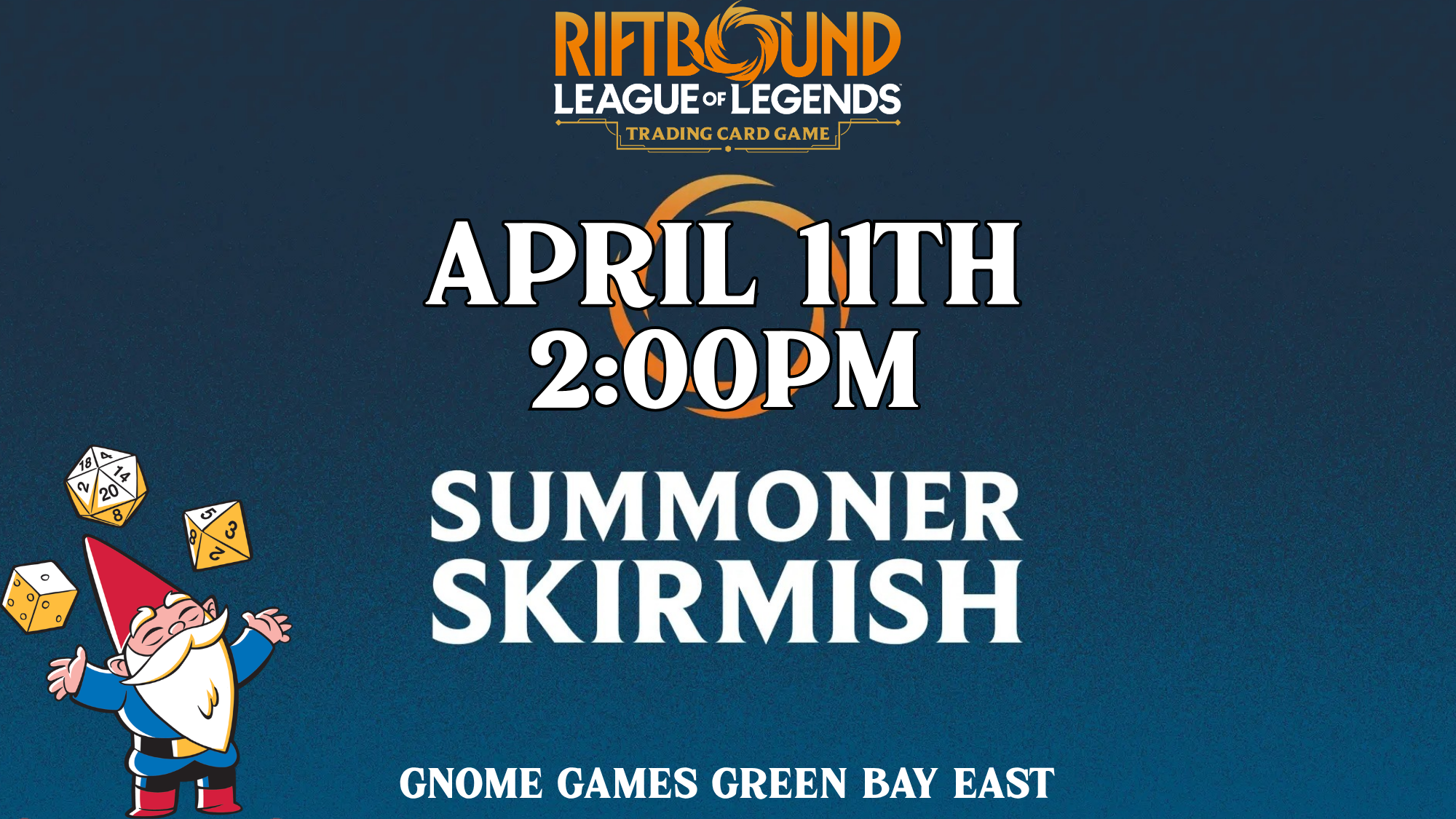
It’s time for the Riftbound Summoner Skirmish at Gnome Games!

Saturday, April 11th
2:00pm
$15.00+tax

Bring your latest, best constructed deck! Please be aware of errata and tournament rules for this event.

Up to 16 players will be eligible to play at this event

You will need a valid Riftbound account to sign-up for this event.

Each player will get a Participation Promo, a booster pack, and a chance to win more throughout the event!
When you win-a-match, you’ll win-a-pack! The Top 8 players will get another promo, and the top player for the day will get a playmat!

Look for other events on our website

408. End of Match Procedure

    • 408.1. A match is complete once a match result is recorded by players or a tournament official.
    • 408.2. If the time limit for a competition round is reached before a winner is determined, the player whose turn it is finishes their turn.
      • 408.2.a. After that player’s turn is complete, five additional turns are played, and then the match ends.
      • 408.2.b. If the game is incomplete at the end of the additional turns, the winner of the game is the one with the highest score. If scores are tied, the game is a draw.
      • 408.2.c. Additional turns are untimed, but at high OPL a judge must be present to ensure a reasonable pace of play.
      • 408.2.d. If the players are between games when the round time ends, no new game is started.
    • 408.3. The winner of a match is the first player who reaches the appropriate game win score.
      • 408.3.a. If neither player has reached that score by the end of the end of match procedure, the player with more game wins wins the match.
      • 408.3.b. If players are tied on game wins, the match is a draw.

Riftbound Nexus Nights – Thursdays at Green Bay East

Join the Gnomes each Thursday at 5:30pm for Riftbound’s Nexus Nights!

Tournaments starting at 5:30pm
Entry is $10
Win a Match Win a Pack, Riftbound Promos

Join us weekly for some fun Riftbound action.

The domains are:

  • Fury (Red) –
    • Fury is about aggression, passion, and the thrill of conquering.
    • Fury decks often use damage-based removal, Accelerate (and other ways to enter ready), and rewards for conquering to achieve victory.
    • Generally, Fury cards have a harder time drawing lots of cards or killing units directly, especially units that stay out of combat in their base.
    • Examples of Fury from popular fiction are Conan the Barbarian, Blade, and Anakin Skywalker.
  • Calm (Green)
    • Calm is about balance, meditation, and the peace of holding.
    • Calm decks often use defensive tricks, moving enemies, and negating interaction (like counterspells and stuns) to defend their holds and achieve victory.
    • Generally, Calm cards have a harder time being very aggressive or interacting without using their units.
    • Examples of Calm from popular fiction are Gandalf, Baloo, and Obi Wan Kenobi.
  • Mind (Blue)
    • Mind is about innovation, outsmarting opponents, and the benefits of intelligence and curiosity.
    • Mind decks often use long-term planning, shrinking tricks, card draw, hidden and gear synergy to gain an advantage and achieve victory.
    • Generally, Mind cards have a harder time with moving units or having efficient units.
    • Examples of Mind from popular fiction are Sherlock Holmes, Curious George, and Yoda.
  • Body (Orange)
    • Body is about physical superiority, agility, and connection to the wilds.
    • Body decks often ramp their resources, play efficient and high impact units, and dominate combats to achieve victory.
    • Generally, Body cards have a harder time with finding efficient card draw or noncombat spells.
    • Examples of Body from popular fiction are The Terminator, Juggernaut, and Chewbacca.
  • Chaos (Purple) –
    • Chaos is about unpredictability, rebellion, and trickiness.
    • Chaos decks often manipulate position and the trash, use hidden tricks, and filter toward the right cards to achieve victory.
    • Generally, Chaos cards have a harder time permanently eliminating a threat or giving permanent advantages to its units.
    • Examples of Chaos from popular fiction are V (for Vendetta), Spiderman, and Han Solo.
  • Order (Yellow) –
    • Order is about unity, community, and sacrifice for the greater good.
    • Order decks often generate many small units, gain effects on unit death, and kill units directly to achieve victory.
    • Generally, Order cards have a harder time dealing with smaller units and moving units.
    • Examples of Order from popular fiction are Superman, Cobra Commander, and Leia Organa.

One way to start building a deck is to start with a domain you think fits your playstyle (or just style, generally) and search for cool cards you might want to fit into a deck.

Look for this and other events at our website: gnomegames.com/events/month!

Riftbound Nexus Nights – Thursdays at Green Bay East

Join the Gnomes each Thursday at 5:30pm for Riftbound’s Nexus Nights!

Tournaments starting at 5:30pm
Entry is $10
Win a Match Win a Pack, Riftbound Promos

Join us weekly for some fun Riftbound action.

The domains are:

  • Fury (Red) –
    • Fury is about aggression, passion, and the thrill of conquering.
    • Fury decks often use damage-based removal, Accelerate (and other ways to enter ready), and rewards for conquering to achieve victory.
    • Generally, Fury cards have a harder time drawing lots of cards or killing units directly, especially units that stay out of combat in their base.
    • Examples of Fury from popular fiction are Conan the Barbarian, Blade, and Anakin Skywalker.
  • Calm (Green)
    • Calm is about balance, meditation, and the peace of holding.
    • Calm decks often use defensive tricks, moving enemies, and negating interaction (like counterspells and stuns) to defend their holds and achieve victory.
    • Generally, Calm cards have a harder time being very aggressive or interacting without using their units.
    • Examples of Calm from popular fiction are Gandalf, Baloo, and Obi Wan Kenobi.
  • Mind (Blue)
    • Mind is about innovation, outsmarting opponents, and the benefits of intelligence and curiosity.
    • Mind decks often use long-term planning, shrinking tricks, card draw, hidden and gear synergy to gain an advantage and achieve victory.
    • Generally, Mind cards have a harder time with moving units or having efficient units.
    • Examples of Mind from popular fiction are Sherlock Holmes, Curious George, and Yoda.
  • Body (Orange)
    • Body is about physical superiority, agility, and connection to the wilds.
    • Body decks often ramp their resources, play efficient and high impact units, and dominate combats to achieve victory.
    • Generally, Body cards have a harder time with finding efficient card draw or noncombat spells.
    • Examples of Body from popular fiction are The Terminator, Juggernaut, and Chewbacca.
  • Chaos (Purple) –
    • Chaos is about unpredictability, rebellion, and trickiness.
    • Chaos decks often manipulate position and the trash, use hidden tricks, and filter toward the right cards to achieve victory.
    • Generally, Chaos cards have a harder time permanently eliminating a threat or giving permanent advantages to its units.
    • Examples of Chaos from popular fiction are V (for Vendetta), Spiderman, and Han Solo.
  • Order (Yellow) –
    • Order is about unity, community, and sacrifice for the greater good.
    • Order decks often generate many small units, gain effects on unit death, and kill units directly to achieve victory.
    • Generally, Order cards have a harder time dealing with smaller units and moving units.
    • Examples of Order from popular fiction are Superman, Cobra Commander, and Leia Organa.

One way to start building a deck is to start with a domain you think fits your playstyle (or just style, generally) and search for cool cards you might want to fit into a deck.

Look for this and other events at our website: gnomegames.com/events/month!