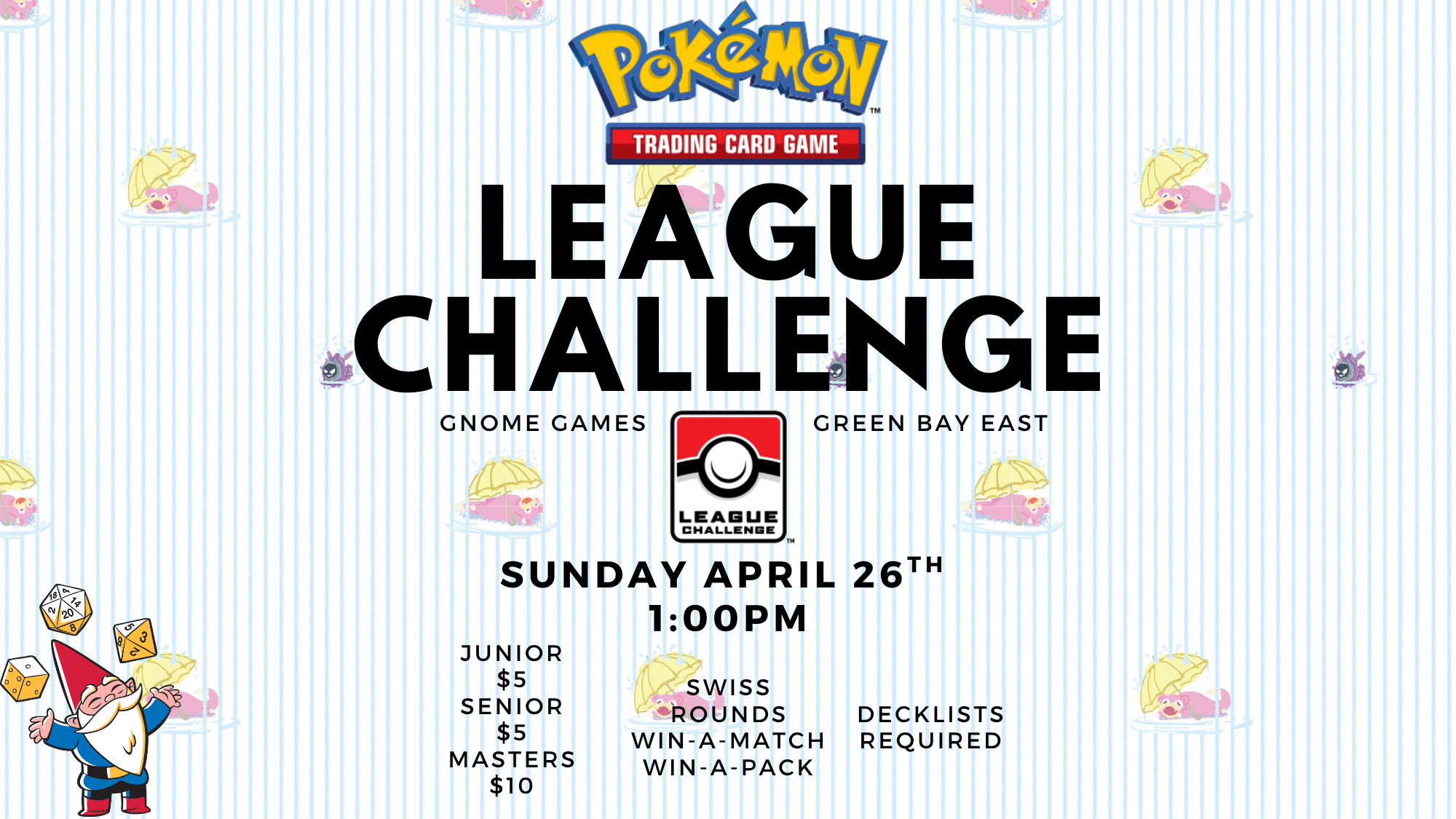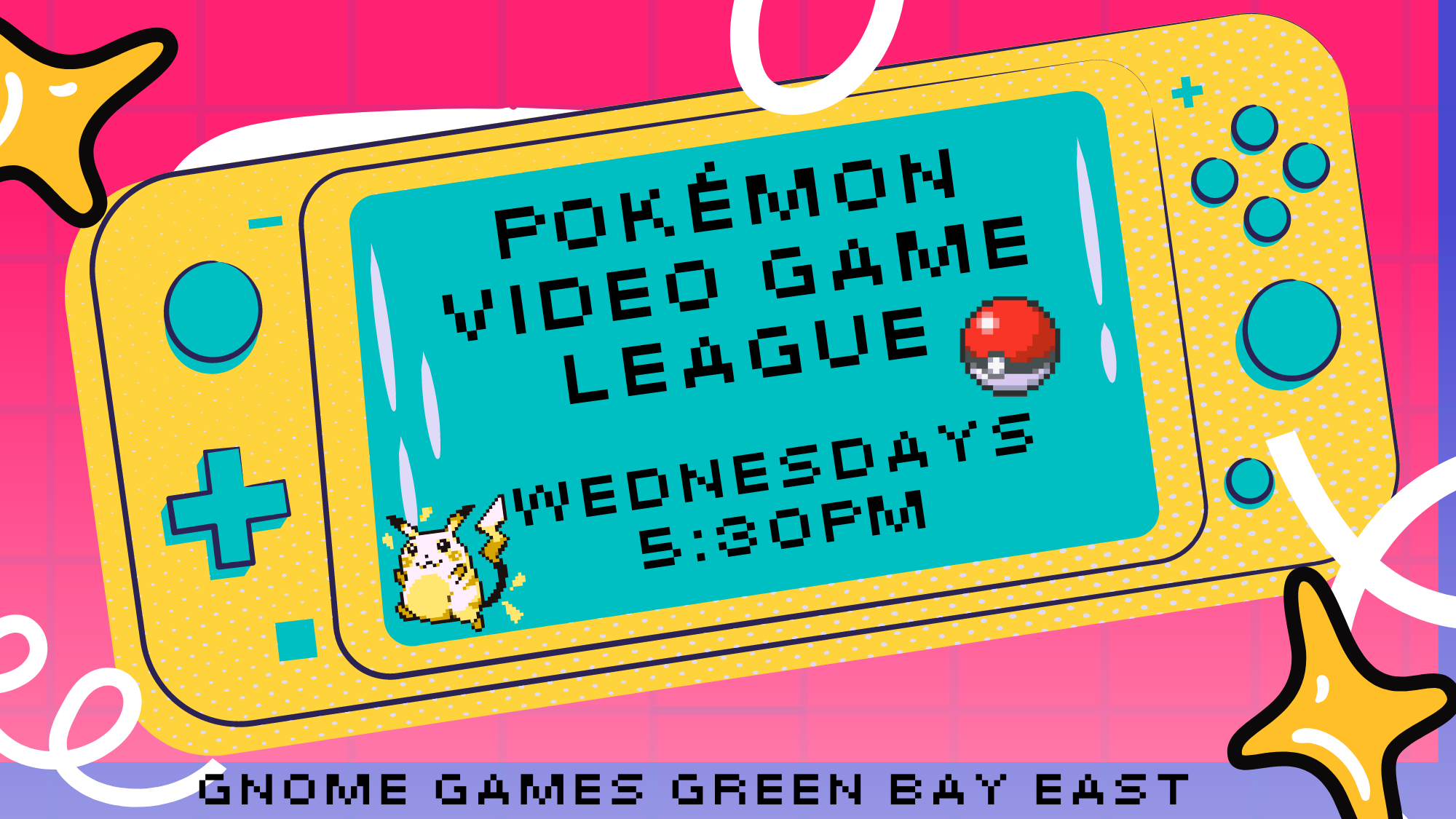
Poke-fans! Bring your mom, bring your, dad, bring your brothers and sisters and grandma and grandpa and lets have fun with Pokémon – together!
This is a just for fun time to get together with other Poke-fans. Families and all skill levels are welcome.
We’ll play the card game, watch cartoons, color, and every month we’ll pick one Saturday to do something special!

Poke-fans! Bring your mom, bring your, dad, bring your brothers and sisters and grandma and grandpa and lets have fun with Pokémon – together!
This is a just for fun time to get together with other Poke-fans. Families and all skill levels are welcome.
We’ll play the card game, watch cartoons, color, and every month we’ll pick one Saturday to do something special!

Join the Gnomes each Friday at 6:30pm for Riftbound’s Nexus Nights!
We’re inviting players out to play Riftbound in a variety of formats with a simple cost of purchasing a pack of Riftbound! Promos will go out based on attendance.
There are a multitude of formats available to play: 1 v 1, 2 v 2, or 3-4 player free for all! You’ll want to stay up to date with the most current errata or rules changes, some of which is available here: https://riftbound.leagueoflegends.com/en-us/news/rules-and-releases/riftbound-origins-card-errata/
If you’re looking for help building decks you might like information from the designers: https://riftbound.leagueoflegends.com/en-us/news/rules-and-releases/deckbuilding-primer/
The domains are:
- Fury (Red) –
- Fury is about aggression, passion, and the thrill of conquering.
- Fury decks often use damage-based removal, Accelerate (and other ways to enter ready), and rewards for conquering to achieve victory.
- Generally, Fury cards have a harder time drawing lots of cards or killing units directly, especially units that stay out of combat in their base.
- Examples of Fury from popular fiction are Conan the Barbarian, Blade, and Anakin Skywalker.
- Calm (Green) –
- Calm is about balance, meditation, and the peace of holding.
- Calm decks often use defensive tricks, moving enemies, and negating interaction (like counterspells and stuns) to defend their holds and achieve victory.
- Generally, Calm cards have a harder time being very aggressive or interacting without using their units.
- Examples of Calm from popular fiction are Gandalf, Baloo, and Obi Wan Kenobi.
- Mind (Blue) –
- Mind is about innovation, outsmarting opponents, and the benefits of intelligence and curiosity.
- Mind decks often use long-term planning, shrinking tricks, card draw, hidden and gear synergy to gain an advantage and achieve victory.
- Generally, Mind cards have a harder time with moving units or having efficient units.
- Examples of Mind from popular fiction are Sherlock Holmes, Curious George, and Yoda.
- Body (Orange) –
- Body is about physical superiority, agility, and connection to the wilds.
- Body decks often ramp their resources, play efficient and high impact units, and dominate combats to achieve victory.
- Generally, Body cards have a harder time with finding efficient card draw or noncombat spells.
- Examples of Body from popular fiction are The Terminator, Juggernaut, and Chewbacca.
- Chaos (Purple) –
- Chaos is about unpredictability, rebellion, and trickiness.
- Chaos decks often manipulate position and the trash, use hidden tricks, and filter toward the right cards to achieve victory.
- Generally, Chaos cards have a harder time permanently eliminating a threat or giving permanent advantages to its units.
- Examples of Chaos from popular fiction are V (for Vendetta), Spiderman, and Han Solo.
- Order (Yellow) –
- Order is about unity, community, and sacrifice for the greater good.
- Order decks often generate many small units, gain effects on unit death, and kill units directly to achieve victory.
- Generally, Order cards have a harder time dealing with smaller units and moving units.
- Examples of Order from popular fiction are Superman, Cobra Commander, and Leia Organa.
One way to start building a deck is to start with a domain you think fits your playstyle (or just style, generally) and search for cool cards you might want to fit into a deck.
Look for this and other events at our website: gnomegames.com/events/month!

Join the Gnomes each Friday at 6:30pm for Riftbound’s Nexus Nights!
We’re inviting players out to play Riftbound in a variety of formats with a simple cost of purchasing a pack of Riftbound! Promos will go out based on attendance.
There are a multitude of formats available to play: 1 v 1, 2 v 2, or 3-4 player free for all! You’ll want to stay up to date with the most current errata or rules changes, some of which is available here: https://riftbound.leagueoflegends.com/en-us/news/rules-and-releases/riftbound-origins-card-errata/
If you’re looking for help building decks you might like information from the designers: https://riftbound.leagueoflegends.com/en-us/news/rules-and-releases/deckbuilding-primer/
The domains are:
- Fury (Red) –
- Fury is about aggression, passion, and the thrill of conquering.
- Fury decks often use damage-based removal, Accelerate (and other ways to enter ready), and rewards for conquering to achieve victory.
- Generally, Fury cards have a harder time drawing lots of cards or killing units directly, especially units that stay out of combat in their base.
- Examples of Fury from popular fiction are Conan the Barbarian, Blade, and Anakin Skywalker.
- Calm (Green) –
- Calm is about balance, meditation, and the peace of holding.
- Calm decks often use defensive tricks, moving enemies, and negating interaction (like counterspells and stuns) to defend their holds and achieve victory.
- Generally, Calm cards have a harder time being very aggressive or interacting without using their units.
- Examples of Calm from popular fiction are Gandalf, Baloo, and Obi Wan Kenobi.
- Mind (Blue) –
- Mind is about innovation, outsmarting opponents, and the benefits of intelligence and curiosity.
- Mind decks often use long-term planning, shrinking tricks, card draw, hidden and gear synergy to gain an advantage and achieve victory.
- Generally, Mind cards have a harder time with moving units or having efficient units.
- Examples of Mind from popular fiction are Sherlock Holmes, Curious George, and Yoda.
- Body (Orange) –
- Body is about physical superiority, agility, and connection to the wilds.
- Body decks often ramp their resources, play efficient and high impact units, and dominate combats to achieve victory.
- Generally, Body cards have a harder time with finding efficient card draw or noncombat spells.
- Examples of Body from popular fiction are The Terminator, Juggernaut, and Chewbacca.
- Chaos (Purple) –
- Chaos is about unpredictability, rebellion, and trickiness.
- Chaos decks often manipulate position and the trash, use hidden tricks, and filter toward the right cards to achieve victory.
- Generally, Chaos cards have a harder time permanently eliminating a threat or giving permanent advantages to its units.
- Examples of Chaos from popular fiction are V (for Vendetta), Spiderman, and Han Solo.
- Order (Yellow) –
- Order is about unity, community, and sacrifice for the greater good.
- Order decks often generate many small units, gain effects on unit death, and kill units directly to achieve victory.
- Generally, Order cards have a harder time dealing with smaller units and moving units.
- Examples of Order from popular fiction are Superman, Cobra Commander, and Leia Organa.
One way to start building a deck is to start with a domain you think fits your playstyle (or just style, generally) and search for cool cards you might want to fit into a deck.
Look for this and other events at our website: gnomegames.com/events/month!

Join the Gnomes each Friday at 6:30pm for Riftbound’s Nexus Nights!
We’re inviting players out to play Riftbound in a variety of formats with a simple cost of purchasing a pack of Riftbound! Promos will go out based on attendance.
There are a multitude of formats available to play: 1 v 1, 2 v 2, or 3-4 player free for all! You’ll want to stay up to date with the most current errata or rules changes, some of which is available here: https://riftbound.leagueoflegends.com/en-us/news/rules-and-releases/riftbound-origins-card-errata/
If you’re looking for help building decks you might like information from the designers: https://riftbound.leagueoflegends.com/en-us/news/rules-and-releases/deckbuilding-primer/
The domains are:
- Fury (Red) –
- Fury is about aggression, passion, and the thrill of conquering.
- Fury decks often use damage-based removal, Accelerate (and other ways to enter ready), and rewards for conquering to achieve victory.
- Generally, Fury cards have a harder time drawing lots of cards or killing units directly, especially units that stay out of combat in their base.
- Examples of Fury from popular fiction are Conan the Barbarian, Blade, and Anakin Skywalker.
- Calm (Green) –
- Calm is about balance, meditation, and the peace of holding.
- Calm decks often use defensive tricks, moving enemies, and negating interaction (like counterspells and stuns) to defend their holds and achieve victory.
- Generally, Calm cards have a harder time being very aggressive or interacting without using their units.
- Examples of Calm from popular fiction are Gandalf, Baloo, and Obi Wan Kenobi.
- Mind (Blue) –
- Mind is about innovation, outsmarting opponents, and the benefits of intelligence and curiosity.
- Mind decks often use long-term planning, shrinking tricks, card draw, hidden and gear synergy to gain an advantage and achieve victory.
- Generally, Mind cards have a harder time with moving units or having efficient units.
- Examples of Mind from popular fiction are Sherlock Holmes, Curious George, and Yoda.
- Body (Orange) –
- Body is about physical superiority, agility, and connection to the wilds.
- Body decks often ramp their resources, play efficient and high impact units, and dominate combats to achieve victory.
- Generally, Body cards have a harder time with finding efficient card draw or noncombat spells.
- Examples of Body from popular fiction are The Terminator, Juggernaut, and Chewbacca.
- Chaos (Purple) –
- Chaos is about unpredictability, rebellion, and trickiness.
- Chaos decks often manipulate position and the trash, use hidden tricks, and filter toward the right cards to achieve victory.
- Generally, Chaos cards have a harder time permanently eliminating a threat or giving permanent advantages to its units.
- Examples of Chaos from popular fiction are V (for Vendetta), Spiderman, and Han Solo.
- Order (Yellow) –
- Order is about unity, community, and sacrifice for the greater good.
- Order decks often generate many small units, gain effects on unit death, and kill units directly to achieve victory.
- Generally, Order cards have a harder time dealing with smaller units and moving units.
- Examples of Order from popular fiction are Superman, Cobra Commander, and Leia Organa.
One way to start building a deck is to start with a domain you think fits your playstyle (or just style, generally) and search for cool cards you might want to fit into a deck.
Look for this and other events at our website: gnomegames.com/events/month!

Join the Gnomes each Friday at 6:30pm for Riftbound’s Nexus Nights!
We’re inviting players out to play Riftbound in a variety of formats with a simple cost of purchasing a pack of Riftbound! Promos will go out based on attendance.
There are a multitude of formats available to play: 1 v 1, 2 v 2, or 3-4 player free for all! You’ll want to stay up to date with the most current errata or rules changes, some of which is available here: https://riftbound.leagueoflegends.com/en-us/news/rules-and-releases/riftbound-origins-card-errata/
If you’re looking for help building decks you might like information from the designers: https://riftbound.leagueoflegends.com/en-us/news/rules-and-releases/deckbuilding-primer/
The domains are:
- Fury (Red) –
- Fury is about aggression, passion, and the thrill of conquering.
- Fury decks often use damage-based removal, Accelerate (and other ways to enter ready), and rewards for conquering to achieve victory.
- Generally, Fury cards have a harder time drawing lots of cards or killing units directly, especially units that stay out of combat in their base.
- Examples of Fury from popular fiction are Conan the Barbarian, Blade, and Anakin Skywalker.
- Calm (Green) –
- Calm is about balance, meditation, and the peace of holding.
- Calm decks often use defensive tricks, moving enemies, and negating interaction (like counterspells and stuns) to defend their holds and achieve victory.
- Generally, Calm cards have a harder time being very aggressive or interacting without using their units.
- Examples of Calm from popular fiction are Gandalf, Baloo, and Obi Wan Kenobi.
- Mind (Blue) –
- Mind is about innovation, outsmarting opponents, and the benefits of intelligence and curiosity.
- Mind decks often use long-term planning, shrinking tricks, card draw, hidden and gear synergy to gain an advantage and achieve victory.
- Generally, Mind cards have a harder time with moving units or having efficient units.
- Examples of Mind from popular fiction are Sherlock Holmes, Curious George, and Yoda.
- Body (Orange) –
- Body is about physical superiority, agility, and connection to the wilds.
- Body decks often ramp their resources, play efficient and high impact units, and dominate combats to achieve victory.
- Generally, Body cards have a harder time with finding efficient card draw or noncombat spells.
- Examples of Body from popular fiction are The Terminator, Juggernaut, and Chewbacca.
- Chaos (Purple) –
- Chaos is about unpredictability, rebellion, and trickiness.
- Chaos decks often manipulate position and the trash, use hidden tricks, and filter toward the right cards to achieve victory.
- Generally, Chaos cards have a harder time permanently eliminating a threat or giving permanent advantages to its units.
- Examples of Chaos from popular fiction are V (for Vendetta), Spiderman, and Han Solo.
- Order (Yellow) –
- Order is about unity, community, and sacrifice for the greater good.
- Order decks often generate many small units, gain effects on unit death, and kill units directly to achieve victory.
- Generally, Order cards have a harder time dealing with smaller units and moving units.
- Examples of Order from popular fiction are Superman, Cobra Commander, and Leia Organa.
One way to start building a deck is to start with a domain you think fits your playstyle (or just style, generally) and search for cool cards you might want to fit into a deck.
Look for this and other events at our website: gnomegames.com/events/month!


Dungeons and Dragons is on Fridays at Gnome Games Green Bay West!
Fridays at 6pm we’ll have a Dungeon Master (DM) here to run a table of D&D from 6pm – 8:00pm! Table fees are $10. There are limited seats available for the Gnome DM, but we can supply an additional adventure to a valiant DM who will run for additional players.
These are perfect events for brand new or recent players to join. Our adventures will frequently focus on helping new players join D&D!
Pregenerated Characters will be available: D&D Character Sheets | Dungeons & Dragons (wizards.com) for previews of some of the 1st level characters that will be available.
Bring your own dice or purchase a set when you come in! Are you ready to join the table?
There are a number of great resources for helping new players and new GMs learn Dungeons and Dragons! Here are a few:
How to Play | Dungeons & Dragons (wizards.com)
Some playlists of YouTube videos for 1st time players:
Ginny Di: 28! videos on various tips and ways to play.
Dungeon Dudes: 20 videos on Character Creation.


Dungeons and Dragons is on Fridays at Gnome Games Green Bay West!
Fridays at 6pm we’ll have a Dungeon Master (DM) here to run a table of D&D from 6pm – 8:00pm! Table fees are $10. There are limited seats available for the Gnome DM, but we can supply an additional adventure to a valiant DM who will run for additional players.
These are perfect events for brand new or recent players to join. Our adventures will frequently focus on helping new players join D&D!
Pregenerated Characters will be available: D&D Character Sheets | Dungeons & Dragons (wizards.com) for previews of some of the 1st level characters that will be available.
Bring your own dice or purchase a set when you come in! Are you ready to join the table?
There are a number of great resources for helping new players and new GMs learn Dungeons and Dragons! Here are a few:
How to Play | Dungeons & Dragons (wizards.com)
Some playlists of YouTube videos for 1st time players:
Ginny Di: 28! videos on various tips and ways to play.
Dungeon Dudes: 20 videos on Character Creation.


Dungeons and Dragons is on Fridays at Gnome Games Green Bay West!
Fridays at 6pm we’ll have a Dungeon Master (DM) here to run a table of D&D from 6pm – 8:00pm! Table fees are $10. There are limited seats available for the Gnome DM, but we can supply an additional adventure to a valiant DM who will run for additional players.
These are perfect events for brand new or recent players to join. Our adventures will frequently focus on helping new players join D&D!
Pregenerated Characters will be available: D&D Character Sheets | Dungeons & Dragons (wizards.com) for previews of some of the 1st level characters that will be available.
Bring your own dice or purchase a set when you come in! Are you ready to join the table?
There are a number of great resources for helping new players and new GMs learn Dungeons and Dragons! Here are a few:
How to Play | Dungeons & Dragons (wizards.com)
Some playlists of YouTube videos for 1st time players:
Ginny Di: 28! videos on various tips and ways to play.
Dungeon Dudes: 20 videos on Character Creation.


Dungeons and Dragons is on Fridays at Gnome Games Green Bay West!
Fridays at 6pm we’ll have a Dungeon Master (DM) here to run a table of D&D from 6pm – 8:00pm! Table fees are $10. There are limited seats available for the Gnome DM, but we can supply an additional adventure to a valiant DM who will run for additional players.
These are perfect events for brand new or recent players to join. Our adventures will frequently focus on helping new players join D&D!
Pregenerated Characters will be available: D&D Character Sheets | Dungeons & Dragons (wizards.com) for previews of some of the 1st level characters that will be available.
Bring your own dice or purchase a set when you come in! Are you ready to join the table?
There are a number of great resources for helping new players and new GMs learn Dungeons and Dragons! Here are a few:
How to Play | Dungeons & Dragons (wizards.com)
Some playlists of YouTube videos for 1st time players:
Ginny Di: 28! videos on various tips and ways to play.
Dungeon Dudes: 20 videos on Character Creation.